How to look after your watch

A good watch can last for generations if you give it a little attention. It doesn't take much — just the right habits.
Cleaning
- Steel bracelet and case: lukewarm water and a soft toothbrush, then dry with a soft cloth. Only on a water-resistant watch with the crown screwed fully in — otherwise a damp cloth.
- Leather strap: not in water. Let it air after you've been sweating, and replace it when it's worn — leather is a wear part.
- Rubber strap: water and a little mild soap.
Water
Water resistance is given in ATM or bar, and it is measured in a laboratory, not in a wave. A good rule of thumb:
- 3 ATM: rain and splashes — not bathing.
- 5 ATM: a shower or a short swim.
- 10 ATM: swimming and snorkelling.
- 20 ATM and above: for diving.
Never press the pushers under water, screw the crown fully in, and take the watch off in the sauna and hot water — heat makes the gaskets work.
Magnets
Magnets are what a mechanical watch doesn't like: the magnetic clasp on a cover or a bag, speakers and the fridge door. A magnetised watch suddenly runs many minutes off. It isn't damage — a watchmaker demagnetises it in a few minutes.
Storage
Dry and at room temperature, ideally in its box, so the crystal and case don't get scratched against other watches. An automatic watch you don't wear simply stops; set it when you put it on again.
Service
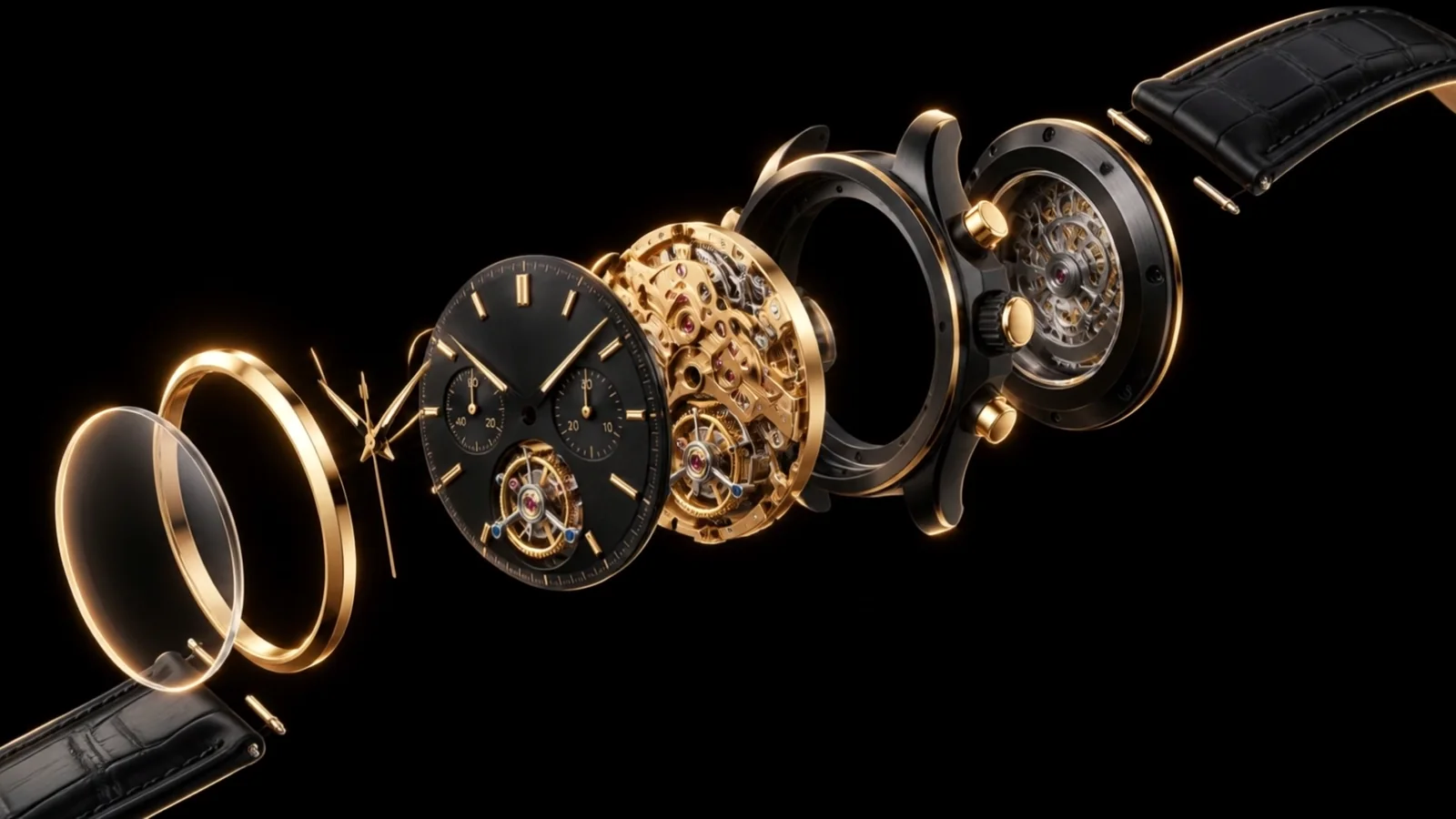
- Automatic watches: a service every 5–7 years, when the movement is cleaned, lubricated and adjusted, and the gaskets are replaced.
- Water resistance: have it pressure-tested every other year if you use the watch in water.
- Quartz watches: have the battery changed by a watchmaker, so the water resistance holds.
If you discover a fault while the watch is new, it's a matter for the statutory warranty — not for a service.